

PIGMENT
The treatment changes with the cause
Melasma comes from hormones and UV acting together. Freckles and blemishes come from UV exposure adding up over the years. Acne marks are what inflammation leaves behind in brown. A different cause means a different device and a different number of sessions. The examination sorts out the cause first. Only then do we set which device you will have and how many times.
Equipment
Equipment
The devices actually used in this treatment. Tap a card to see how one works and what a session involves.
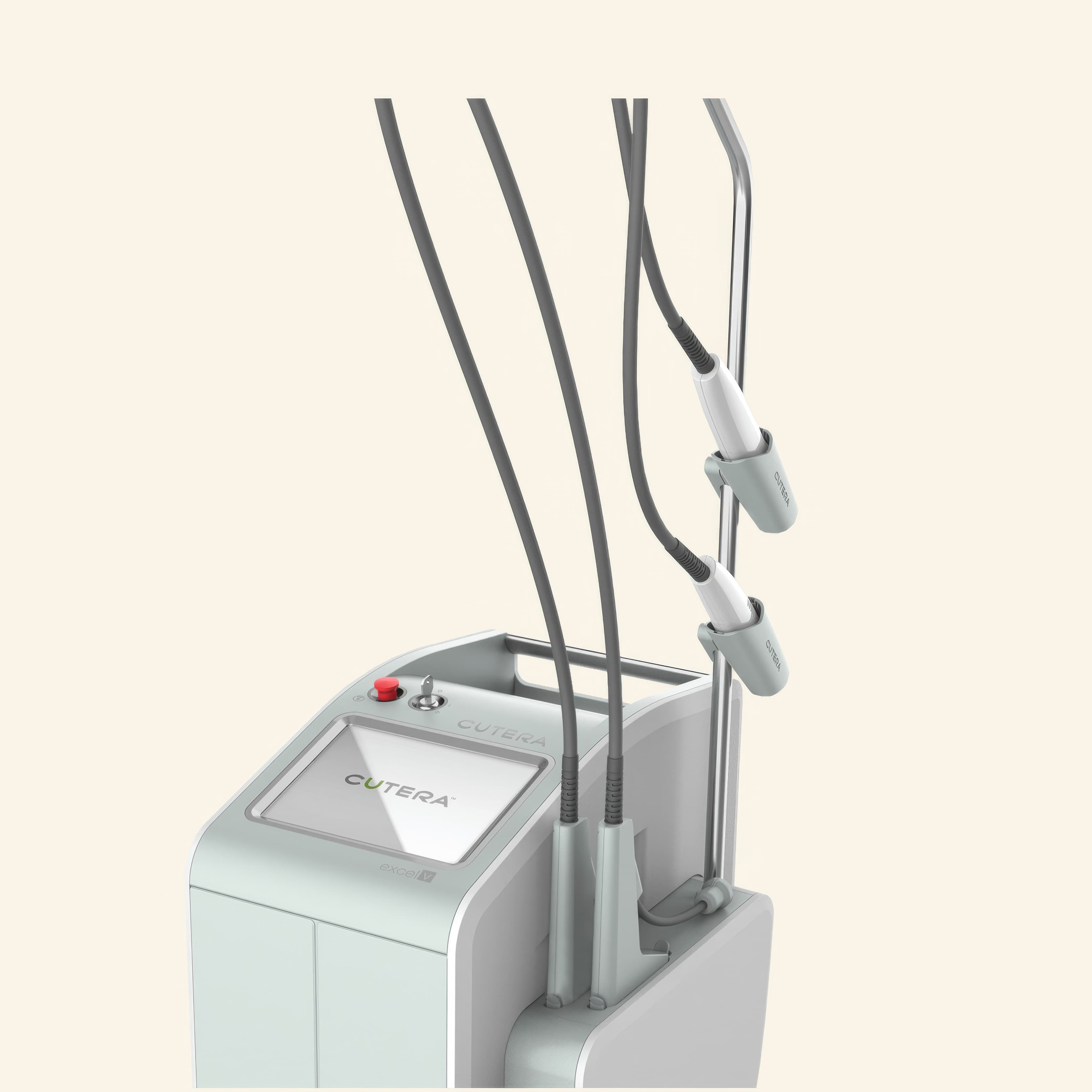 Excel VA laser from Cutera in the US. 532nm goes to pigment, 1064nm to blood vessels. About 10 min per session, five sessions or more.
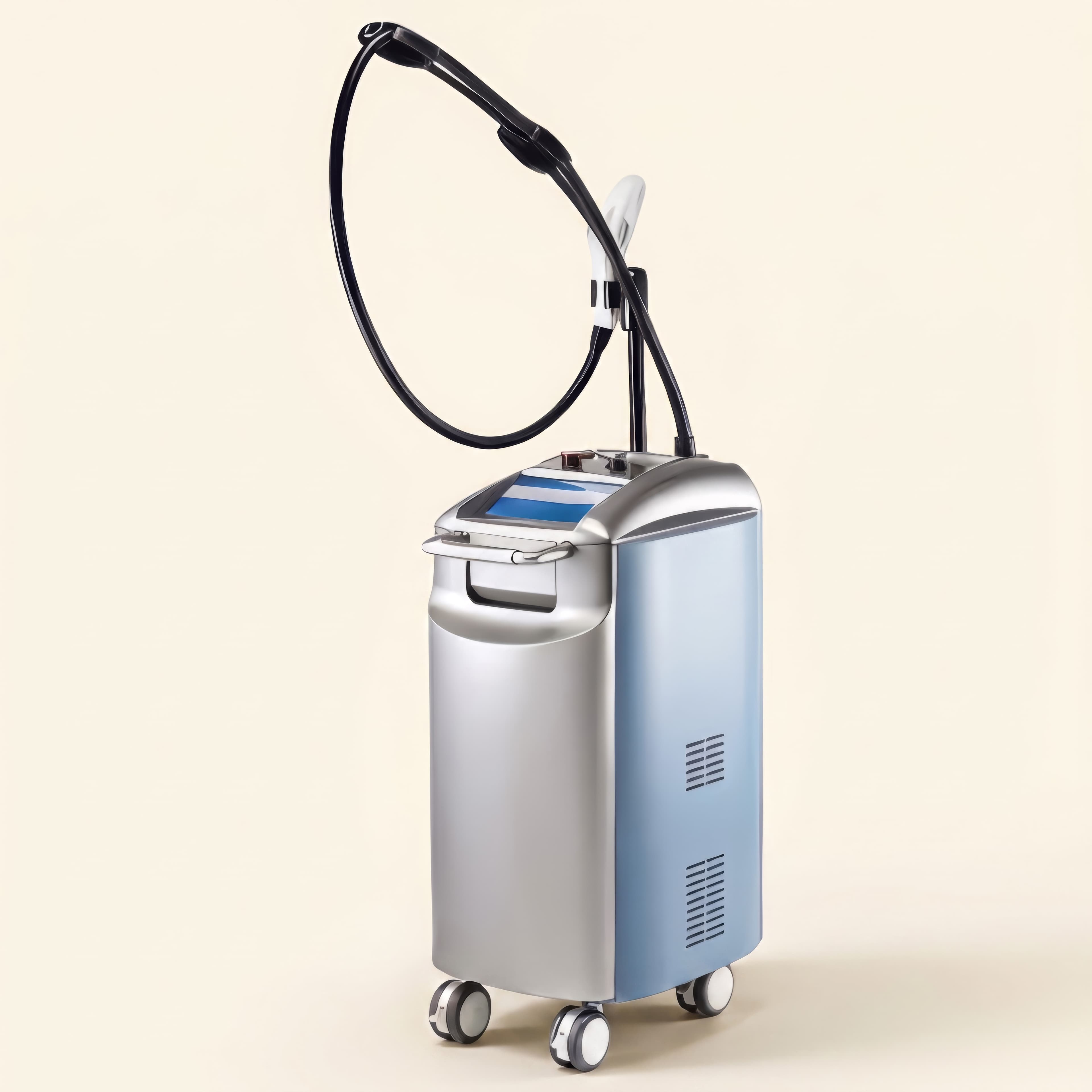 Cellec IPLA light-based device from Jeisys. Nine filters divide the wavelengths, so a wide area is covered in one pass. About 20 min per session, five sessions or more.
 Laser ToningA toning laser that splits 532nm and 1064nm into two pulses. About 1 hour per session, ten sessions or more.
EXCEL V
Excel V
Two wavelengths, 532nm and 1064nm. Where pigment and redness are both present, we switch between them and take each separately. About 10 min per session, with no anaesthesia. Given at 1 to 2 week intervals, five sessions or more.
excel VView equipment details- Procedure timeAbout 10 min
- IntervalEvery 1 to 2 weeks
- AnaesthesiaNone
- Sessions5 or more
WAVELENGTH BY PIGMENT
Different pigment, different wavelength
On the same device, the target changes with the wavelength and the mode. We establish what is doing the most on your face right now, then set the combination.
- 532nm, pigment in the epidermisThe shorter wavelength is absorbed by melanin in the shallower layer. It goes to pigment that sits in the epidermis, such as faint spots and blemishes.
- 1064nm, vessels further downThe longer wavelength passes the epidermis and reaches deeper layers. We choose it where vessels show through, as with facial redness or dilated capillaries.
- Long-pulse toning modeLong-pulse 1064nm delivers heat to the dermis. Pores, skin texture and redness are taken alongside the pigment in the same session.
- Two handpieces, three modesThe M1, M2 and M3 modes answer to pigment, fine vessels and redness. The handpiece and the mode are chosen from what your skin shows.

PRINCIPLE
Pigment and redness, taken apart in one session
Skin with long-standing melasma usually carries redness and fine vessels as well. Take out only the pigment, over and over, and the colour lightens while the face stays red. Excel V takes pigment in the epidermis with 532nm and deeper vessels with 1064nm. Within the same session we change wavelength and handle the two separately.
CELLEC
Cellec IPL
Nine filters select only the wavelength band needed. Where blemishes and redness are scattered widely, we cover the whole face evenly instead of going spot by spot. About 20 min per session, after topical anaesthetic, at 1 to 2 week intervals, five sessions or more.
Cellec IPLView equipment details- Procedure timeAbout 20 min
- IntervalEvery 1 to 2 weeks
- AnaesthesiaTopical cream
- Sessions5 or more

EVEN COVERAGE
For blemishes spread wide, we cover the whole face evenly
Taking spots out one at a time is slow on skin where blemishes are scattered, and the marks it leaves are uneven. Cellec IPL selects the wavelength band across nine filters and covers a wide area in one pass. We use it to even out the tone of the whole face where epidermal blemishes come with redness or dilated capillaries. The filters are combined and changed according to how dark the pigment is.
TARGET BY FILTER
Change the filter and the target changes
The nine filters on Cellec IPL group into four bands. Shorter wavelengths reach pigment and fine vessels near the epidermis. Longer ones reach deeper layers. The diagrams below are the manufacturer's material for each filter. They show how the filters are divided on one device according to what is being targeted.
- Porphyrin bandThe shortest band. It is absorbed by porphyrins, a substance produced by acne bacteria, so we consider it on skin where inflammation sits alongside the pigment.
- Epidermal pigment and fine vesselsFour filters sit in this range: 500, 530 and 550nm, with 530nm coming in two versions. They reach pigment and fine vessels near the epidermis, so the choice depends on what comes first, faint scattered pigment such as freckles, or the redness.
- Melanin bandThe 560, 590 and 640nm range. This mid band is absorbed by melanin, so we use it where pigment is the main target. The darker the colour, the longer the wavelength chosen, which keeps the load off the epidermis.
- Deeper layersThe longest band. It passes the epidermis and reaches deeper layers, so we reset the treatment conditions and use it where the skin tone is darker or the colour sits deep.
LASER TONING
Laser Toning
It splits the thermal energy into two pulses. Rather than one strong session, this is a course with a high number of sessions. About 1 hour per session, after topical anaesthetic, at 1 to 2 week intervals, ten sessions or more.
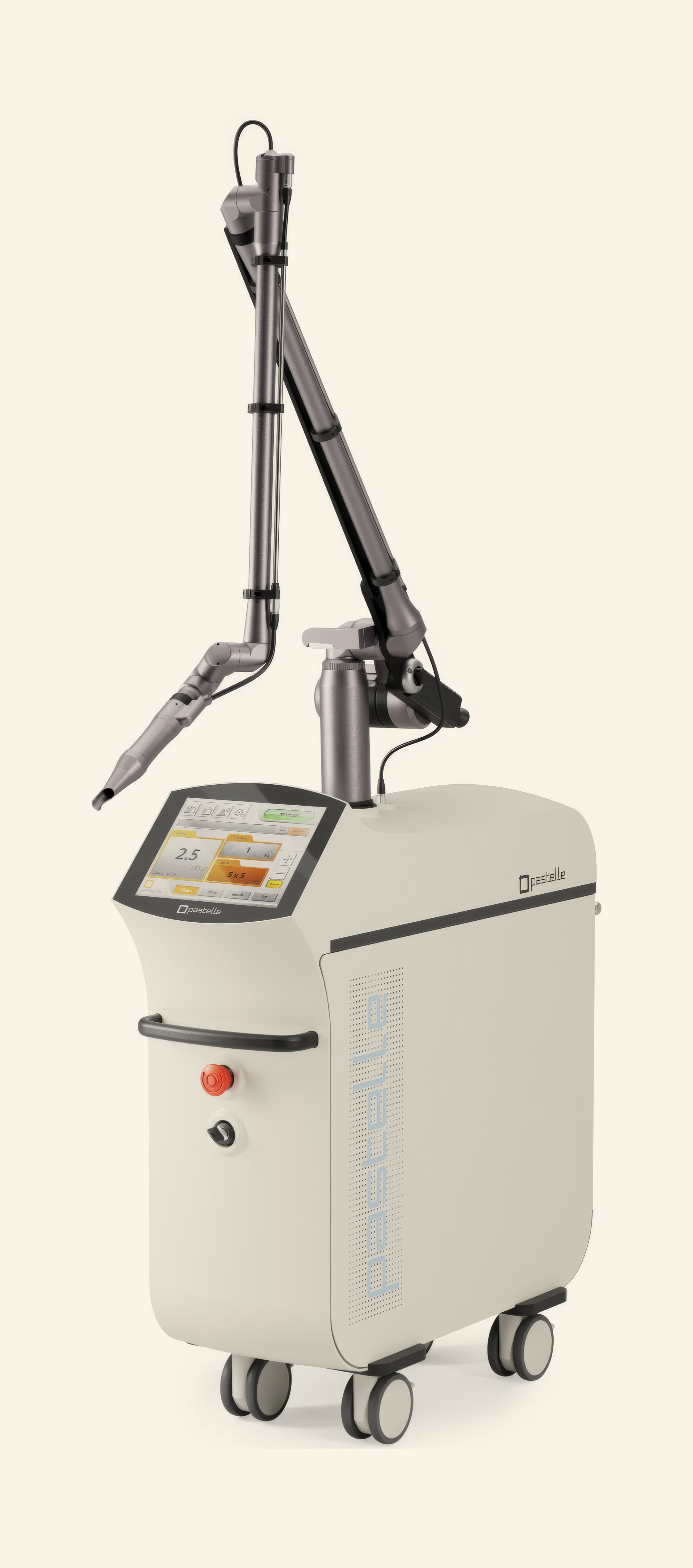 Laser ToningView equipment details
- Procedure timeAbout 1 hour
- IntervalEvery 1 to 2 weeks
- AnaesthesiaTopical cream
- Sessions10 or more
DUAL PULSE
Energy in two pulses for less irritation
Laser Toning divides two things. Wavelength divides the depth. Pulse divides the energy.
- 532nm, faint pigment in the epidermisThe wavelength for faint spots, freckles and blemishes that sit in the shallower layer.
- 1064nm, deeper layersThe wavelength that passes the epidermis and reaches deeper layers. Where the colour sits deep, we split the treatment conditions and use it there.
- PTP, one pulse split in twoThe heat that would go in at once is sent as two pulses instead. For the same total, less heat lands at any one moment.
- Genesis mode, texture as wellHeat is delivered to the tissue beneath the surface to stimulate fibroblasts. Pores, fine lines and firmness are taken in the same session as the pigment.

A LITTLE AT A TIME
Not one strong session, but ten or more
Faint spots near the surface and colour that sits deeper down will not come out under one set of conditions. Laser Toning splits the depth with 532nm and 1064nm, then sends the heat of each shot in two goes instead of one. Less heat lands at any one moment, and the number of sessions rises instead. The standard is ten sessions or more at 1 to 2 week intervals. Pores and skin texture are taken in the same session.
CAUSE
We sort out the cause first, then set the order of treatment
The device and the number of sessions follow the cause. The examination starts by working out which of the three below applies to you.
- 01Pigment from UV lightFreckles and blemishes belong here. They are scattered widely, so we cover the whole face at once rather than picking off spots one at a time. Cellec IPL runs at 1 to 2 week intervals, five sessions or more. If sun protection lapses once the course is finished, the pigment comes back in the same places. We also agree which sunscreen you will use between sessions, and how to apply it.
- 02Melasma from hormonal changeIt darkens quickly after pregnancy and childbirth, or after any hormonal change. Treat it hard in one go and the irritation brings the colour back. We keep the intensity low, split it across 1 to 2 week intervals, and check how much colour has gone at every session before setting the next intensity.
- 03Pigment left by acne marksBrown marks left where inflammation has passed. If redness is still there, we take the redness before the pigment. Reverse that order and the mark gets darker. For redness we use the 1064nm wavelength on Excel V.
RECOMMENDED FOR
Who this is for
If any of these applies, the consultation starts by sorting out which type of pigment you have. The device and the number of sessions follow from the type.
- If melasma spreading symmetrically means you spend longer covering it with make-up
- If scattered freckles and blemishes leave your skin tone looking patchy
- If pigment darkened quickly after childbirth or a hormonal change
- If acne marks have been left brown and are staying that way
- If pigment and facial redness are both there and it is hard to know which to treat first
- If toning has been repeated without the colour lightening, and you want to reconsider the approach
TYPE
Melasma, freckles and blemishes: how they differ
- MelasmaBrown patches that spread symmetrically across the cheekbones, the forehead and around the mouth. Hormones and UV act together, so it comes back readily. It is not something one session clears. We keep the intensity low and build up sessions at 1 to 2 week intervals to lighten it.
- FrecklesSmall spots scattered where UV lands most: the forehead, the cheekbones, the bridge of the nose. Most of this pigment sits in the epidermis, so Cellec IPL covers the whole area at once. If sun protection lapses once the course is finished, they come back in the same places.
- Solar lentigines and seborrhoeic keratosisBrown patches that sit slightly raised above the surface. They do not respond to toning wavelengths, so repeating toning will not lighten them. The approach has to change to a treatment that removes the lesion itself.
- Blemishes and post-inflammatory pigmentationBrown marks left where acne or irritation has passed. If redness is still there, we take the redness before the pigment. Reverse that order and the mark gets darker.
AFTERCARE
Recovery after the treatment
- Day 0Redness, and washing is fineStraight after treatment the face turns red and feels prickly. We settle it with a cold compress and you can go home. Washing your face and using basic skincare are fine from that evening. Start sunscreen on the day of the treatment.
- Days 1 to 3The colour gets darkerFrom the day after treatment, the treated pigment gets darker and looks blackened. That is the pigment being pushed up towards the surface. Many people take fright at this point and stop, and if you stop here the pigment stays where it is. Do not rub or exfoliate. Just moisturise and keep to sun protection.
- Days 5 to 7The crusts come awayFine crusts form where the colour darkened, and they come away on their own between days 5 and 7. Picking them off leaves a mark. During this period, do not exfoliate, scrub, cleanse strongly or use a sauna.
- Weeks 1 to 2Next sessionOnce the crusts have come away, you have the next session. Pigment clears by darkening and lightening in turn, so we do not judge it on the colour after one or two sessions. The colour settles only if you finish the course: five sessions or more for Excel V and Cellec IPL, ten or more for Laser Toning. Stop partway and the pigment that is left comes back up.
- AfterwardsSun protectionEven once the course is finished, the pigment comes back in the same places if sun protection lapses. We tell you which sunscreen suits the season and how much you are outdoors, and how often to reapply it.
FAQ
Frequently asked questions
The pigment looks darker after the treatment.
In most cases this is a normal response. When the laser breaks the pigment up, the fragments rise towards the surface and can look darker for a few days to two weeks. They then flake off with the dead skin and fade. Stopping at this stage leaves the pigment behind. Keep to the planned sessions and we will follow the course with you. If the darkening lasts unusually long, or there is pain or blistering, please come in right away.
Will one session clear my melasma?
No. Pigment comes out across a series of sessions. Excel V and Cellec IPL run five times or more, Laser Toning ten times or more, at 1 to 2 week intervals. There is a period along the way when the colour looks darker, and if you stop during it the pigment stays where it is. At the consultation we tell you the number of sessions and the total time it will take.
Which of the three devices will I have?
It depends on the type of pigment and whether redness is there too. Blemishes scattered widely go to Cellec IPL. Melasma with visible redness and vessels goes to Excel V. Melasma that needs a long course goes to Laser Toning. Sometimes we use only one, and sometimes two alternate across the sessions.
Can areas other than the face be treated?
Yes. The whole face or part of it, and also areas of the body where pigment has come up, such as the neck, the backs of the hands and the arms. Skin thickness and recovery speed differ by area, so we set the intensity and the intervals again. We agree the extent at the consultation first.
I have kept having toning but the colour has not changed.
The pigment may not be the kind toning works on. Raised solar lentigines and lesional pigment do not respond to toning wavelengths. In that case more sessions will not lighten the colour. We sort out the type of pigment again at the examination and change the device.
Can I go about my day straight after the treatment?
Yes. Washing your face and using basic skincare are fine from that evening. Straight after treatment the face is red and prickly, and from the next day the colour looks darker. The crusts come away between days 5 and 7. If you have an important engagement, book around that period.
Is it all right to have this in summer?
Yes. What matters more than the season is whether sun protection is kept up. At times of year with a lot of outdoor activity we lower the intensity and lengthen the intervals. Sunscreen needs reapplying every 2 to 3 hours.
Will pigment treatment help with facial redness too?
It depends on the device. Excel V can take vessels with its 1064nm wavelength, so pigment and redness are handled separately within the same session. Cellec IPL can also be set to redness by changing the filter. Where both are there, we decide at the examination which to take first.
CONSULTATION
No need to work it out alone, let's look at it together
No question is too small. Get in touch on whichever channel suits you.
As of
Treatment options and devices can change. We confirm the details with you at your consultation.