
HOW SKIN REPAIRS
The four stages your skin works through on its own
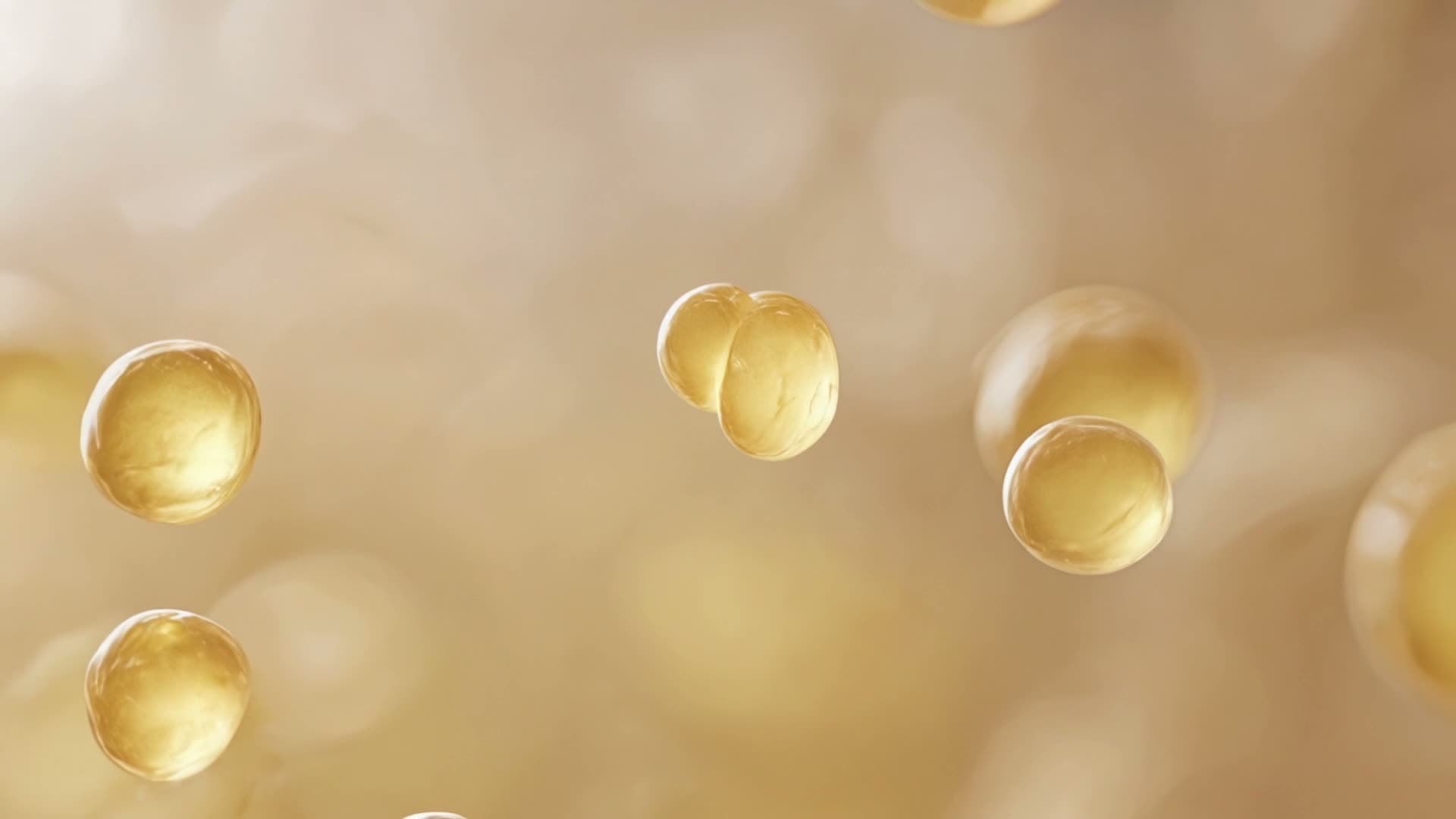
Haemostasis
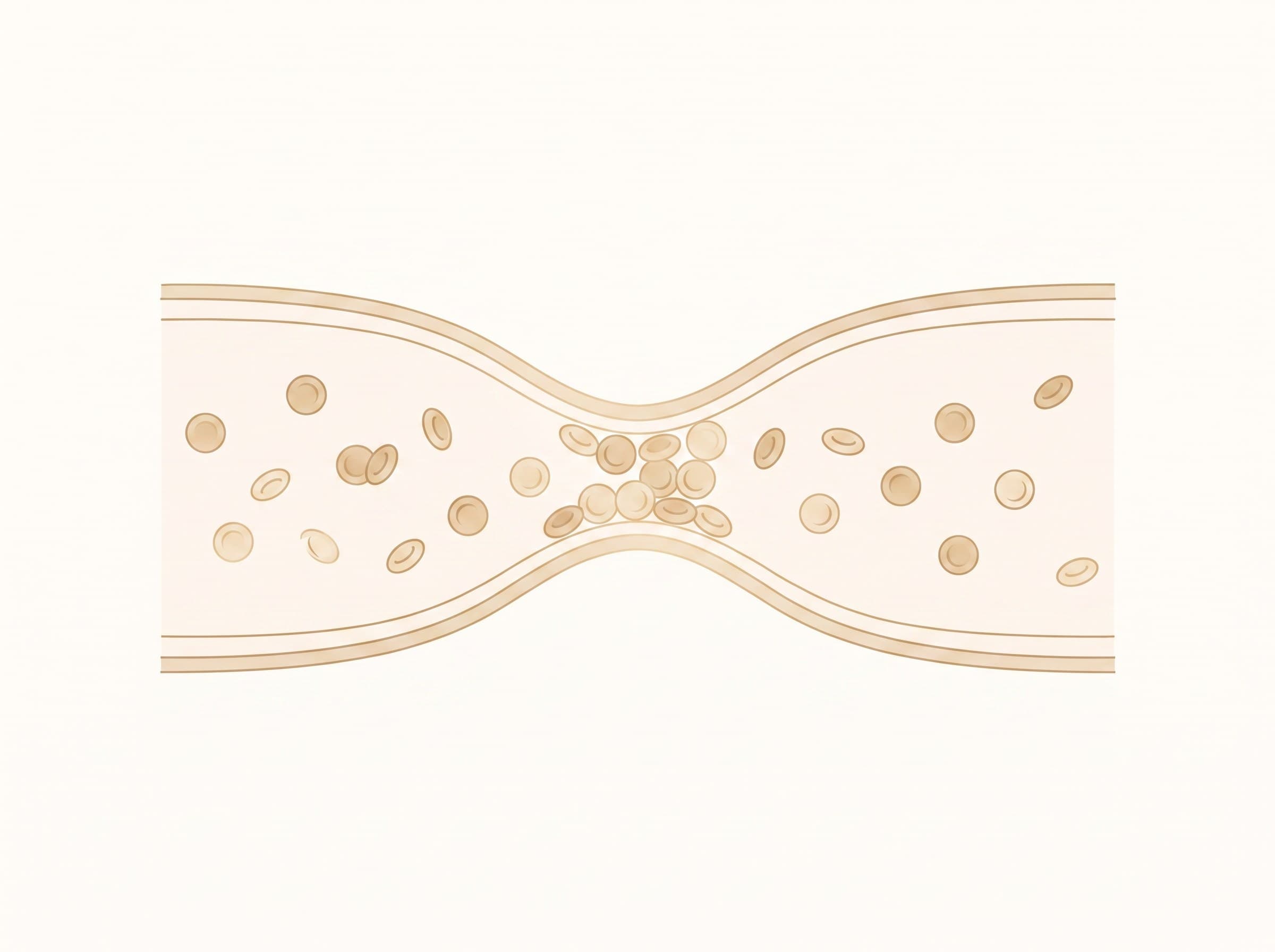
This starts within minutes of the injury. Blood vessels narrow and platelets gather to stop the bleeding. At the same time, signalling molecules are released that call in the next stage.
HOW SKIN REPAIRS
The four stages your skin works through on its own
- 01Immediate
Haemostasis
This starts within minutes of the injury. Blood vessels narrow and platelets gather to stop the bleeding. At the same time, signalling molecules are released that call in the next stage.
- 02Days
Inflammation
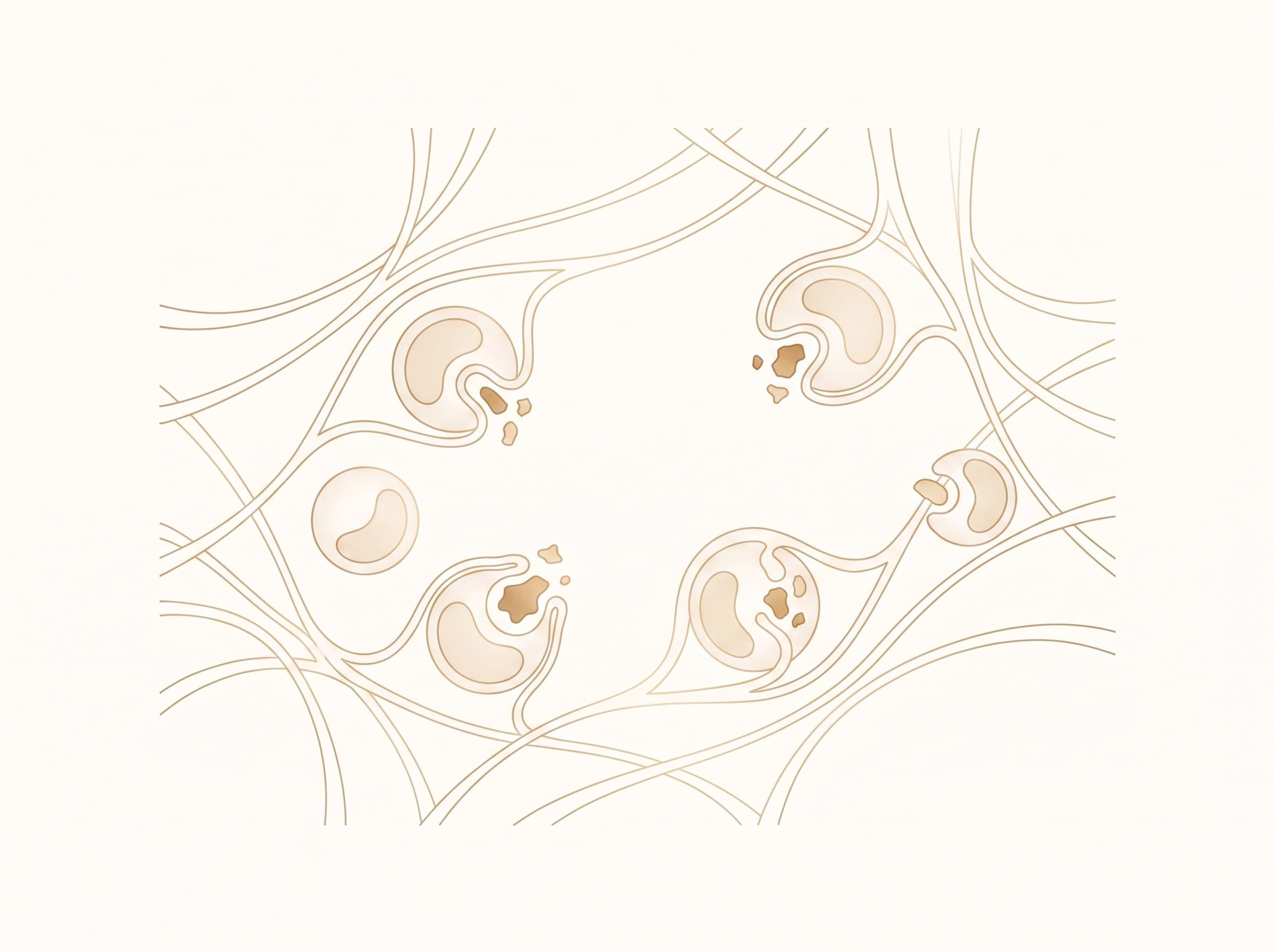
White blood cells move in and clear away damaged tissue and bacteria. The redness and swelling make you want this stage over quickly. But the next stage only begins once the clearing is finished.
- 03From day 5
Proliferation
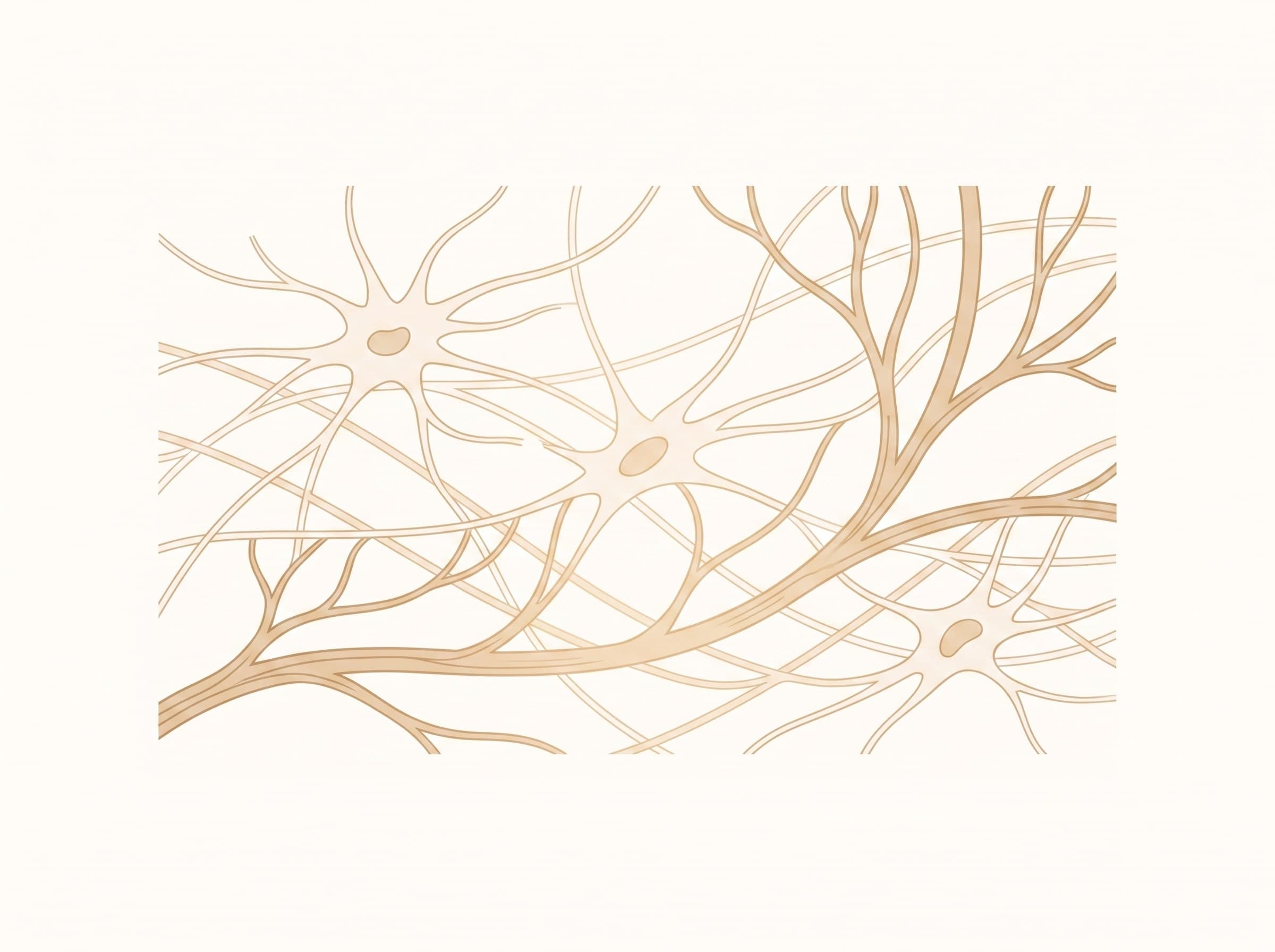
Fibroblasts lay down new collagen. Keratinocytes cover the surface again. New blood vessels grow. Most of the recovery you can actually see happens in this stage.
- 04From week 3
Remodelling
The new collagen is rearranged and the tissue firms up. On the surface it looks fully healed. Inside the skin, this stage can carry on for as long as twelve months.
The image is a diagram drawn to explain the idea. It is not a photograph of real tissue.
RECOVERY PERIOD
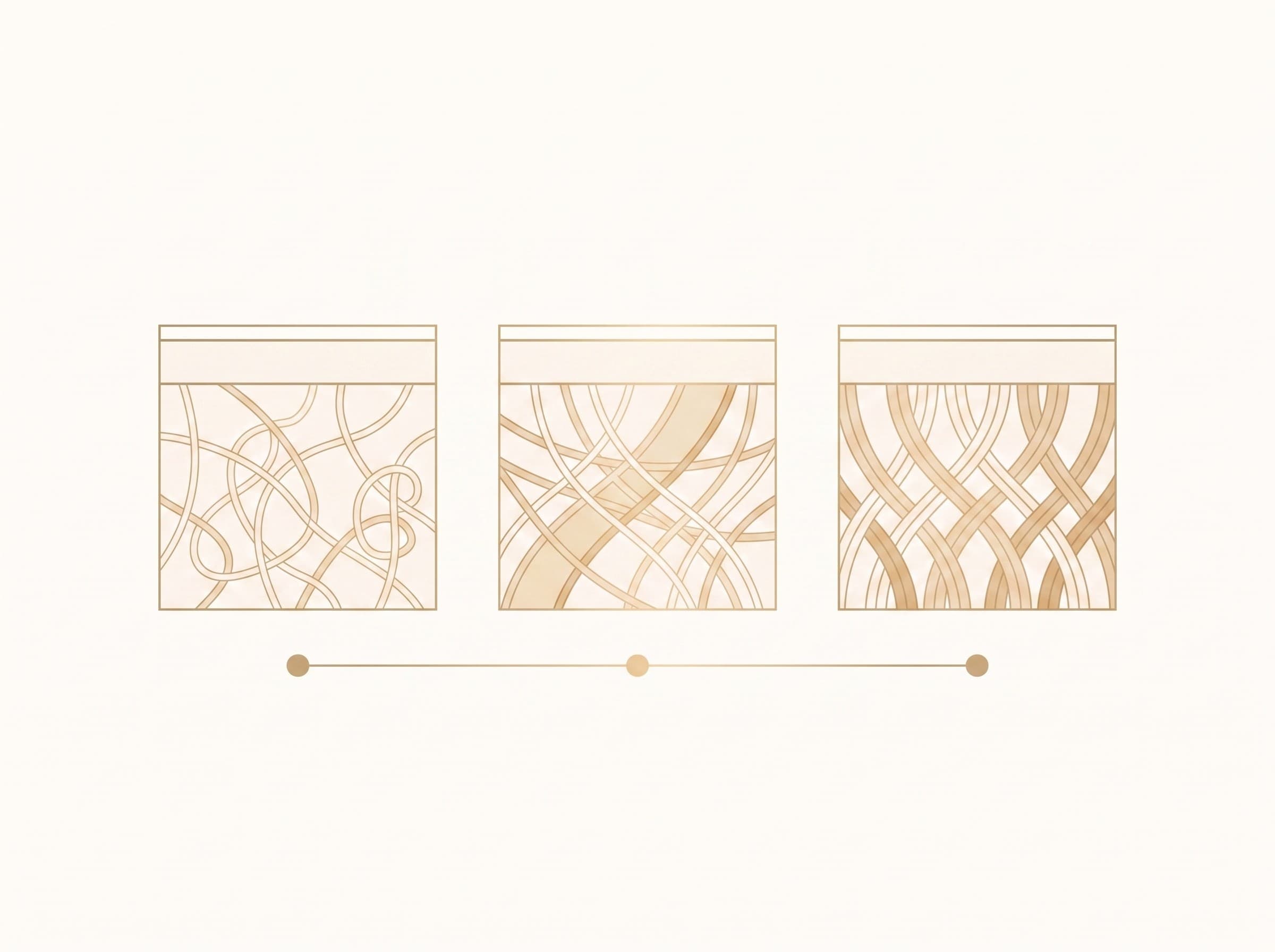
Recovery is measured in months, not in days
Even after the surface has healed, collagen in the dermis is still being rearranged. So we decide the next step from how your skin looks months later, not from how it looks right after a treatment. That is why we do not judge a result within a few days.
FIBROBLAST
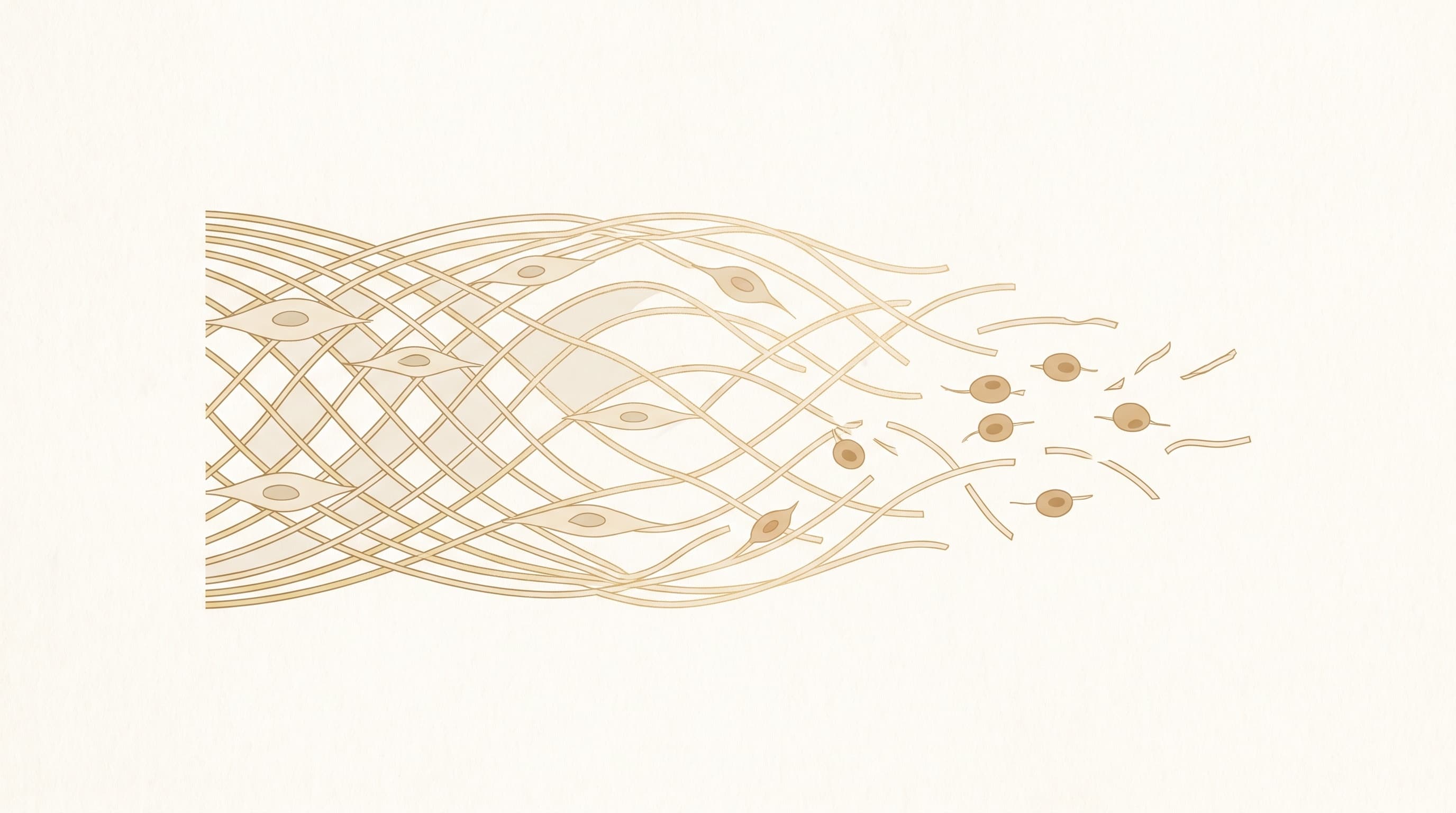
The cells that make collagen need something to hold on to
Fibroblasts in the dermis do their work while they are attached to collagen fibres and held under tension. Age and UV break those fibres into fragments, and the scaffold the cells hold on to gives way. A cell that cannot stretch releases more of the enzyme that breaks collagen down, and makes less new collagen. It becomes a loop: a frayed mesh weakens the cells, and the weakened cells fray the mesh further.
YEARS OF STUDY
The years spent studying regeneration are where this care starts
THE REGENERATIVE VIEWThe medical director studied regenerative fields, including bone marrow-derived stem cells, and spent years looking at how skin finds its own way back. So we read more than what shows on the surface. We read what is happening inside your skin right now.
WHERE RECOVERY STOPS
We find the stage where recovery stalled, then set the order of care
We start by finding where your skin's own repair has stalled. The Skin Regeneration Program is not the name of one procedure. It means examining the skin from the standpoint of recovery, then deciding what comes first.
- A close examination to find where repair stalled
- A recovery plan in the right order
- Care that helps your skin repair on its own
WHAT WE CHECK FIRST
Five things we check, and the order we check them
Skin that is slow to recover usually has a reason. Here is the order we work through before choosing any treatment.
We start with the barrier
When the stratum corneum has broken down, anything applied on top becomes an irritant. We look first at how much moisture is escaping, along with redness and stinging. If the barrier is unstable, the rest of the plan waits until it has settled.
We allow for the pace of recovery
How much the barrier comes back in the 24 hours after damage differs a great deal with age. Under conditions where skin in the twenties and thirties recovered by about half, skin over 80 stayed at around 15% (J Clin Invest 1995). The same stimulus does not mean the same recovery.
We check whether inflammation is still there
Redness where acne has passed, or sensitivity that keeps returning, means the inflammatory stage has not finished. Until it does, the next stage cannot start. Here we settle the skin down first rather than adding more stimulation.
We look at the condition of the dermis
Firmness, pores and scar depth tell us whether fibroblasts have an environment they can work in. Repeating strong stimulation before those conditions are met can leave damage running ahead of recovery.
We set the timetable together
Remodelling runs in months, not days. Rather than promising a fixed number of sessions, we agree in advance when we will check what, and start from there.
START WITH A CONSULT
When it helps to start with a consultation
Sometimes it is quicker to find where recovery is held up than to arrive with one treatment already decided.
- If treatments seem to work only for a while, and your skin soon goes back to how it was
- If redness or sensitivity after a treatment now lasts longer than it used to
- If the acne has passed but the marks and scars are still there
- If your skin feels thinner, the pores look stretched, and the texture has lost its evenness
- If you are not sure where to begin and would like to settle the order
- If you would rather hear which treatments you can leave out than which ones you could have
INFORMATION
Treatment overview
- First consultation
- We allow enough time to assess your skin and set out a plan
- Care
- The plan is built on what the examination finds
- What it includes
- Not a fixed package. It is put together on the day, around what we find
- Follow-up
- We book your next visit before you leave
- How we judge it
- By how the skin looks once remodelling has progressed, not right after the treatment
- Enquiries
- 02-592-3355. Mon, Wed, Thu, Fri 11:00 to 20:00 / Sat, Sun and public holidays 10:00 to 16:30. Closed Tuesdays
FAQ
Frequently asked questions
What kind of treatment is the Skin Regeneration Program?
It is not the name of one procedure. It means finding which stage of your skin's own recovery is running late, then setting the order of care around that. What it includes differs from person to person, according to what the examination finds.
Can I have a stem cell procedure here?
No, we do not offer it. In Korea, procedures classed as advanced regenerative medicine may only be carried out at regenerative medicine institutions designated by the Ministry of Health and Welfare, and only under a plan that has been reviewed and approved. Give Me Clinic is not one of those institutions. This program is ordinary dermatological care and is unrelated to that framework.
Then why talk about regeneration at all?
Because the recovery process the medical director studied in regenerative fields also helps in ordinary dermatological care. Which stage has stalled changes what should be added now and what should wait.
How long before I can tell how my skin has responded?
Remodelling, the last stage of recovery, begins around week three and can run for up to a year. A few days is not long enough to tell. We set the next step from how things look two to three months on.
Does it still work if I am older?
Recovery does slow down. There are reports that the degree of recovery in the 24 hours after barrier damage differs considerably between younger and older skin. But slowing is not the same as stopping. We set the intervals and the intensity to allow for the pace.
Can I come just for a consultation?
Yes. Even if you decide on nothing, we will set out where your skin is now and what should come first. If we think it is better to wait for now, we will tell you so.
CONSULTATION
No need to work it out alone, let's look at it together
No question is too small. Get in touch on whichever channel suits you.

As of
Treatment options and devices can change. We confirm the details with you at your consultation.