

ACNE & SCAR
Finding the cause is where treatment starts
Acne comes from four things happening at once. Sebum production rises. The pore opening blocks with keratin. Bacteria multiply inside it. Inflammation follows. Hormonal change and squeezing by hand add to that. Calm the surface while the causes stay in place, and it starts again in the same spot. So before we decide on a treatment, the examination establishes which cause is doing the most right now.
- Procedure timeAbout 10 to 20 min
- IntervalEvery 2 to 4 weeks
- AnaesthesiaTopical cream
- DurationAbout 1 to 6 months
INFORMATION
Treatment overview
- Procedure time
- Cellec Acne about 10 min, Secret RF about 20 min
- Anaesthesia
- Topical anaesthetic cream
- Recommended sessions
- At least 3
- Treatment areas
- Anywhere with acne, enlarged pores, scarring or red marks
- Recovery
- Redness on the day. Fine flaking and small crusts for 1 to 3 days
- How long it lasts
- This varies a great deal with the depth of the scarring and the state of your skin. Once the course is finished, we agree a maintenance interval with you
Equipment
Equipment
The devices actually used in this treatment. Tap a card to see how one works and what a session involves.
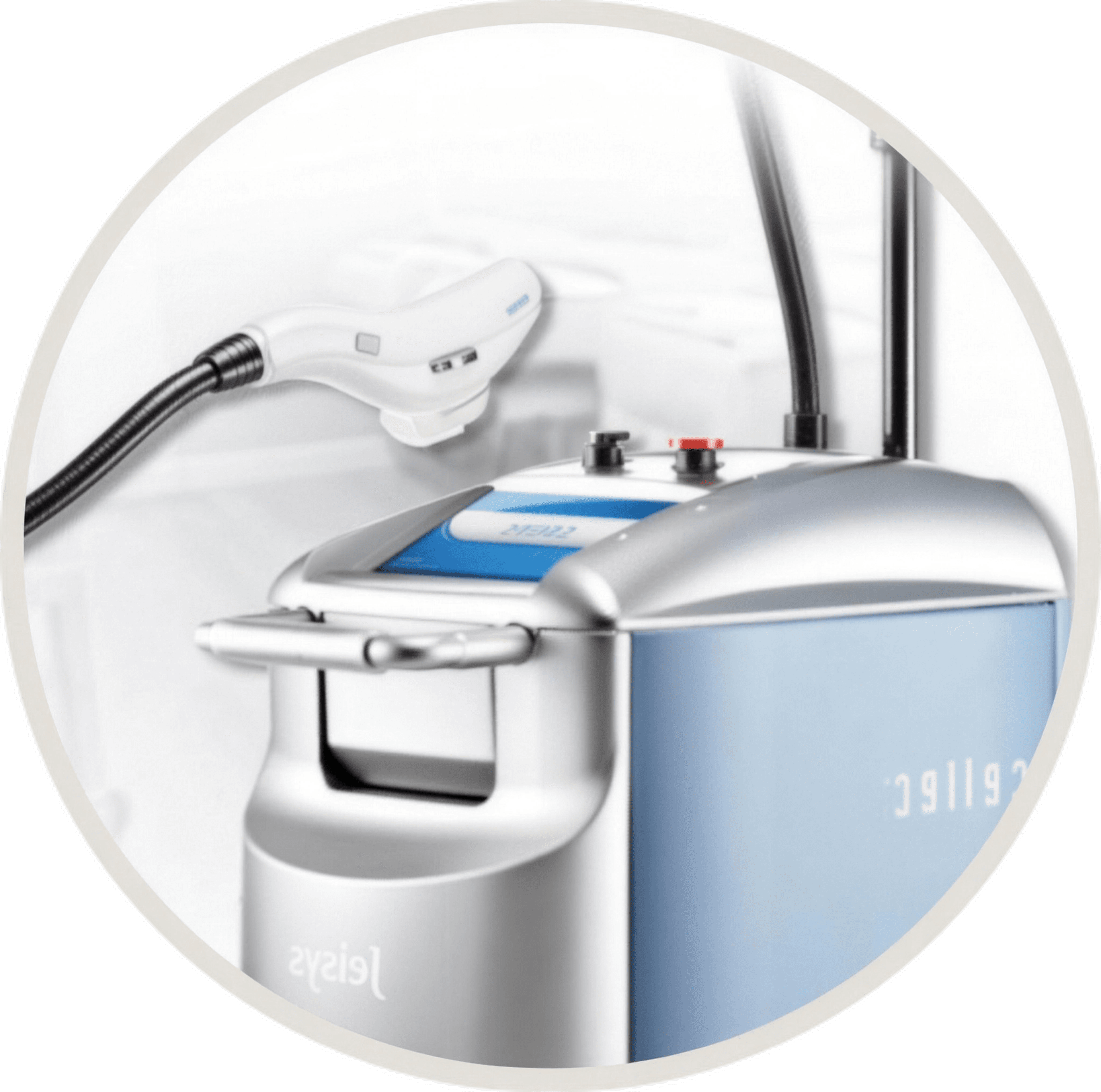
- Cellec AcneInflammatory acne needs three things looked at together: sebum production, the inflammation itself, and the redness and scarring that can be left afterwards. Cellec Acne is a laser with selectable wavelengths, so one session can take each type of lesion differently. It is comparatively undemanding to repeat over a wide area, which suits treating in stages.
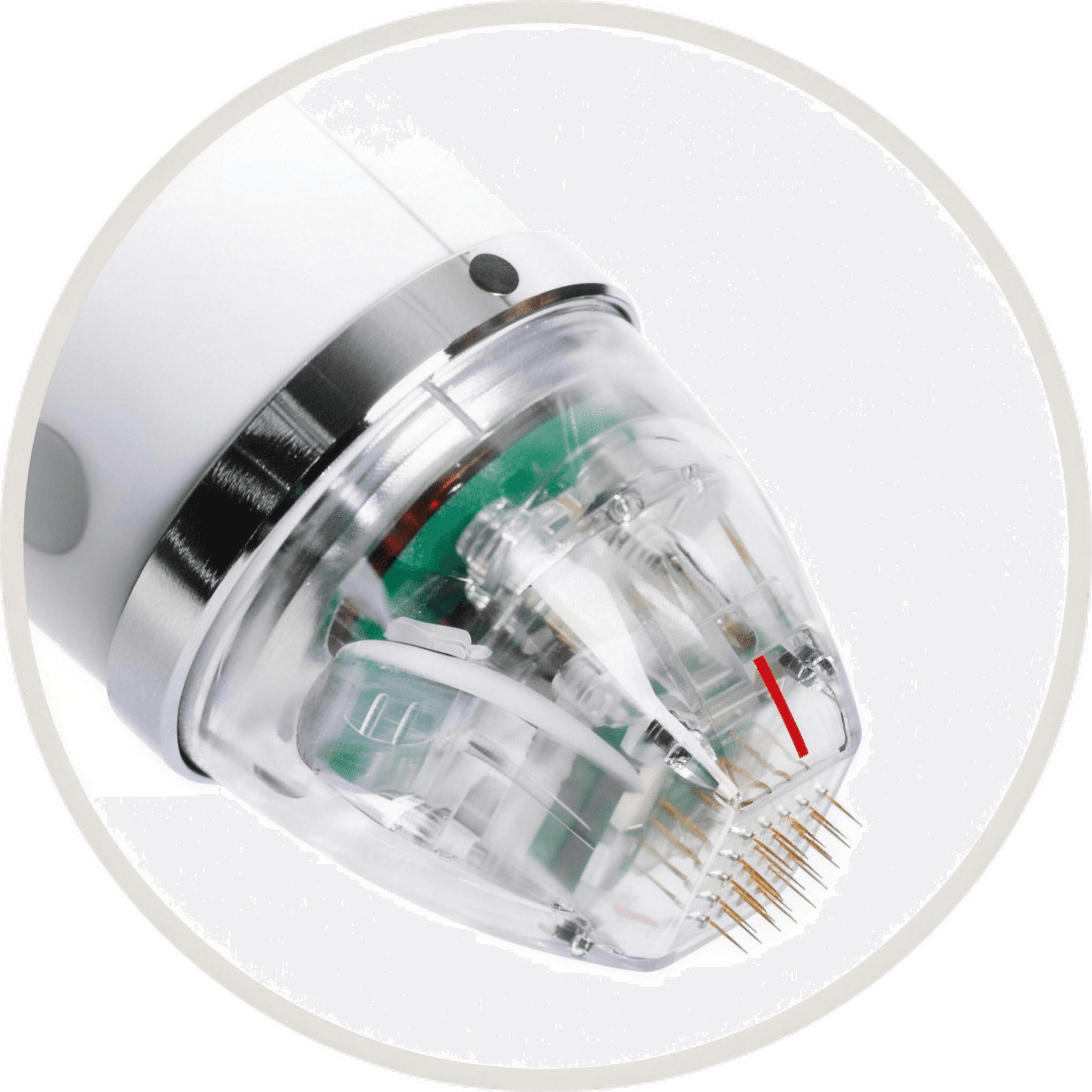
- Secret RFSecret RF passes micro-fine needles through the skin surface and delivers radiofrequency straight into the dermis. It limits damage to the epidermis while prompting collagen renewal in the dermis, so we choose it for layers that surface care cannot reach, such as depressed acne scars and enlarged pores. Needle depth, output and electrode type are set from the state of the lesions. We also use it where set-in nasolabial folds and roughened texture are being looked at alongside the scarring and pores.
MECHANISM
Energy delivered in under a second
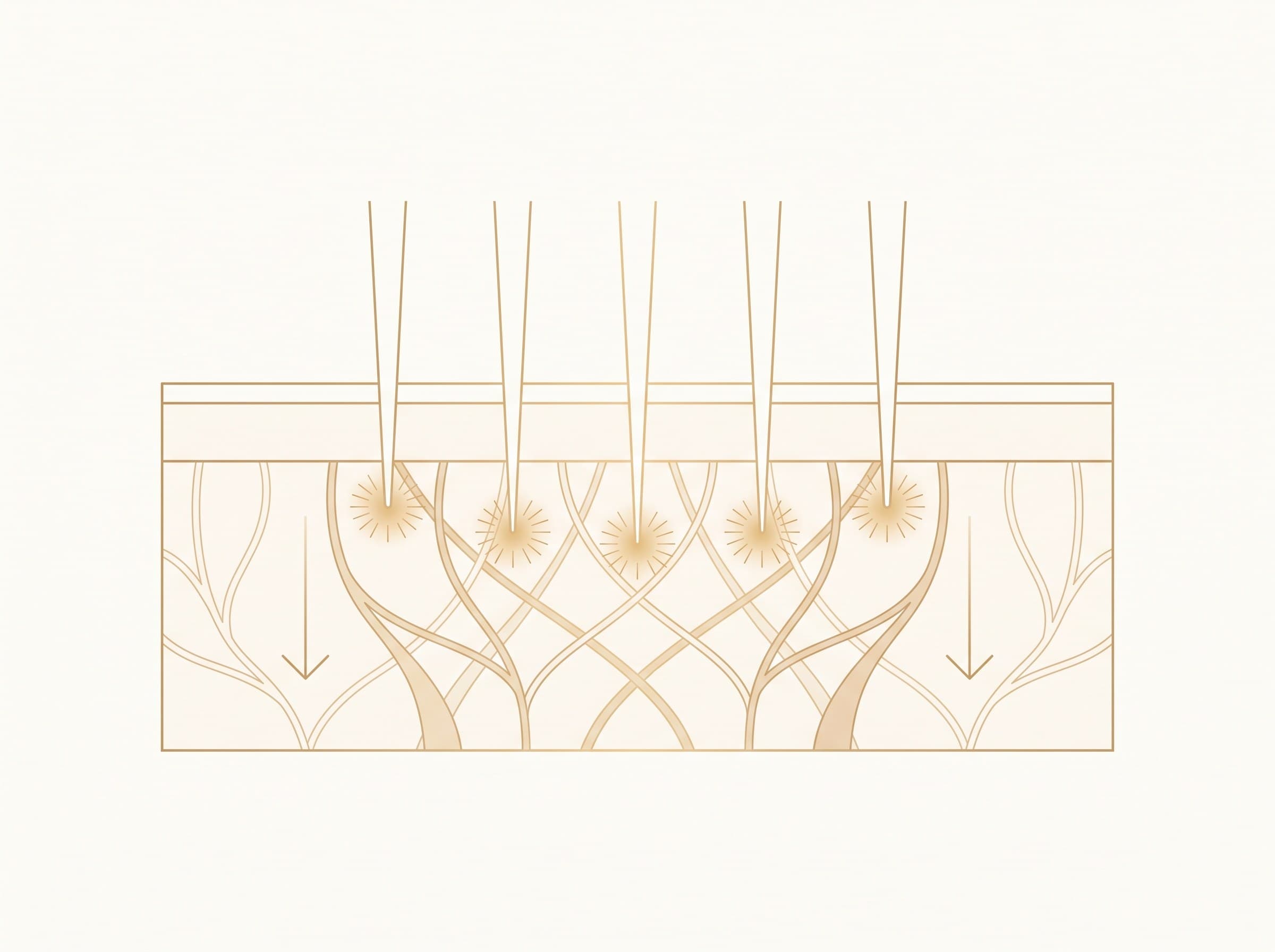
Once the micro-needles reach the dermis, radiofrequency is applied for less than a second. That limits damage to the surrounding tissue and leaves stimulation only at the depth where it is needed, so recovery afterwards tends to be short. The stimulation calls up the skin's own wound-healing response, and in that process growth factors inside the cells become active, helping collagen and elastin to be made again. The channels the needles open are also used as a route for carrying active ingredients into the skin.
TREATMENT DEPTH
Each device reaches a different depth
The device follows the layer we need to work on: the surface, or the dermis. The two are not alternatives to each other. Each one takes a different depth.
- Light divided at the surfaceWhat Cellec Acne acts on changes with the wavelength. Within one session it can take the place where sebum is made, the vascular response left as redness, and the pigment left as brown marks, each separately.
- Through the epidermis, into the dermisWith Secret RF the micro-needles pass through the epidermis, and radiofrequency is released only around the needle tips. That keeps the load off the surface and leaves the stimulation in the dermis.
- Depth reset for each areaEnlarged pores, pitted scars and fine lines each need a different depth. We change the handpiece, the needle electrode and the treatment depth as we go, according to the state of the lesions.
- An order that keeps things apartWhile inflammation is active we work at the surface first. Once marks and scarring have become the main issue, we move to the dermis. We do not put two stimuli on the same spot on the same day.
PROCESS
Working stage by stage helps keep scars from being left
Skip a step in acne treatment and the inflammation settles while the marks stay for a long time. Give Me Clinic builds the plan along the sequence below, and checks your skin again at every session before setting the next step.
- 01Diagnosis and stagingFirst we separate whether inflammation is still active or whether marks and scarring have become the main issue. Different areas of the same face are often at different stages, so the plan is split by area.
- 02Settling the inflammationWhile active acne is present, the first job is not leaving a scar behind. We work on sebum and inflammation, and hold the more demanding treatments back until this period has passed.
- 03Rebuilding marks and scarsOnce the inflammation has settled, we take red marks, pigment and depressed scarring separately. Rebuilding collagen in the dermis takes time, so this runs across several sessions.
- 04Sessions planned alongside careDevices alone do not finish the job. Depending on the state of your skin, we fit peeling that clears the stratum corneum (LaLa Peel), Tiffany Multiwave to stimulate metabolism, skin boosters for skin density, and brightening care where pigment has been left, into the same schedule. We do not stack several stimuli on one area at once. They are spaced far enough apart to read the recovery response.
RECOMMENDED FOR
When we consider Cellec Acne
Matching one of these does not mean everyone is treated the same way. The examination establishes the depth and extent of the lesions, and the wavelength and intensity are set from that.
- Where sebum production is high and inflammatory acne keeps coming back
- Where small papular breakouts are spread across a wide area
- Persistent acne that has been slow to respond to other treatments
- Red marks and blemishes left once the inflammation has settled
- Erythema that makes the whole face look blotchy
- Where the pores and skin texture need attention alongside the acne
SCAR TYPE
Acne scars fall into four types
- Active inflammationSebum production has risen, the pores are blocked, and inflammation is under way. At this stage the first job is settling the inflammation so that no scar is left behind.
- Red marksThe inflammation has settled, but a vascular response remains and the area still looks red. It can fade with time. Where it stays, we approach it with a wavelength that responds to blood vessels.
- Brown marksPigment left behind in brown after inflammation pushes melanin production too far. Squeezing the spot, or UV exposure on top of it, can make it darker.
- Depressed scars and enlarged poresCollagen in the dermis has been damaged and the skin surface has sunk. Covering the surface will not fill it. It needs an approach that rebuilds collagen in the dermis.
AFTERCARE
Recovery after the treatment
- Day 0Redness and warmthThe treated area can turn red and feel warm. Settle it with a cold compress. On the day, wash gently with lukewarm water.
- Days 1 to 3Flaking and fine crustsFine crusts and flaking come up. Picking them off can leave a mark, so let them fall away on their own and keep the skin moisturised.
- Days 4 to 7Texture settlesMost of the visible irritation has cleared. Please keep using sunscreen. It matters at this stage for keeping pigmentation down.
- Weeks 2 to 4Next sessionCollagen renewal takes time. Before the next session we check your skin again and adjust the intensity and the depth.
- If something is wrongContact the clinicIf redness, pain or swelling lasts longer than expected, or if discharge or a fever develops, please contact the clinic rather than treating it yourself. Depending on the person, side effects such as pigmentation, infection or lasting erythema can occur.
FAQ
Frequently asked questions
My acne is still breaking out. Can I have scar treatment at the same time?
While inflammation is active, a scar procedure can act as an irritant, so we usually split the order. We settle the inflammation first, then take the marks and scarring once things are stable. Where areas are at different stages, treatment is sometimes divided accordingly.
How many sessions will I need?
We usually suggest at least three sessions at 2 to 4 week intervals. The number changes with the depth and extent of the scarring, so we check your skin at every visit and adjust.
Do I need Cellec Acne and Secret RF together?
Most people have both. The two reach different layers. Cellec Acne takes sebum and active inflammation at the surface, along with the red and brown marks. Secret RF uses micro-needles to reach the dermis and takes pitted scarring and enlarged pores. Repeat only one and the other layer stays as it is. We do not run both on the same area on the same day. The order is divided across the sessions, which run at 2 to 4 week intervals.
Can I wear make-up straight after the treatment?
After Secret RF, which uses micro-needles, we usually suggest waiting until the next day. For the laser it depends on the area and the intensity, so we tell you individually right after the treatment.
Won't acne marks fade on their own?
Red marks do fade with time in some cases. Pigmentation and depressed scarring often struggle to resolve on their own, and UV exposure while you wait can make them darker. It is better to have your skin looked at before you decide.
What side effects can occur?
Redness, swelling, flaking and fine crusting at the treated area are fairly common and usually clear within a few days. Depending on the person, pigmentation, lasting erythema or infection can occur, so please tell us your medical history and any medication you are taking before treatment. Contact the clinic straight away if anything feels wrong.
CONSULTATION
No need to work it out alone, let's look at it together
No question is too small. Get in touch on whichever channel suits you.
As of
Treatment options and devices can change. We confirm the details with you at your consultation.